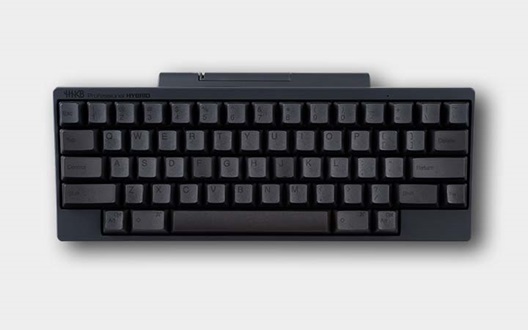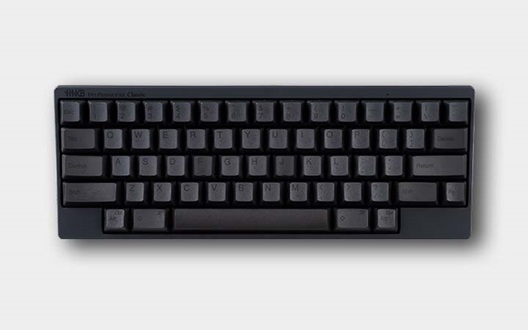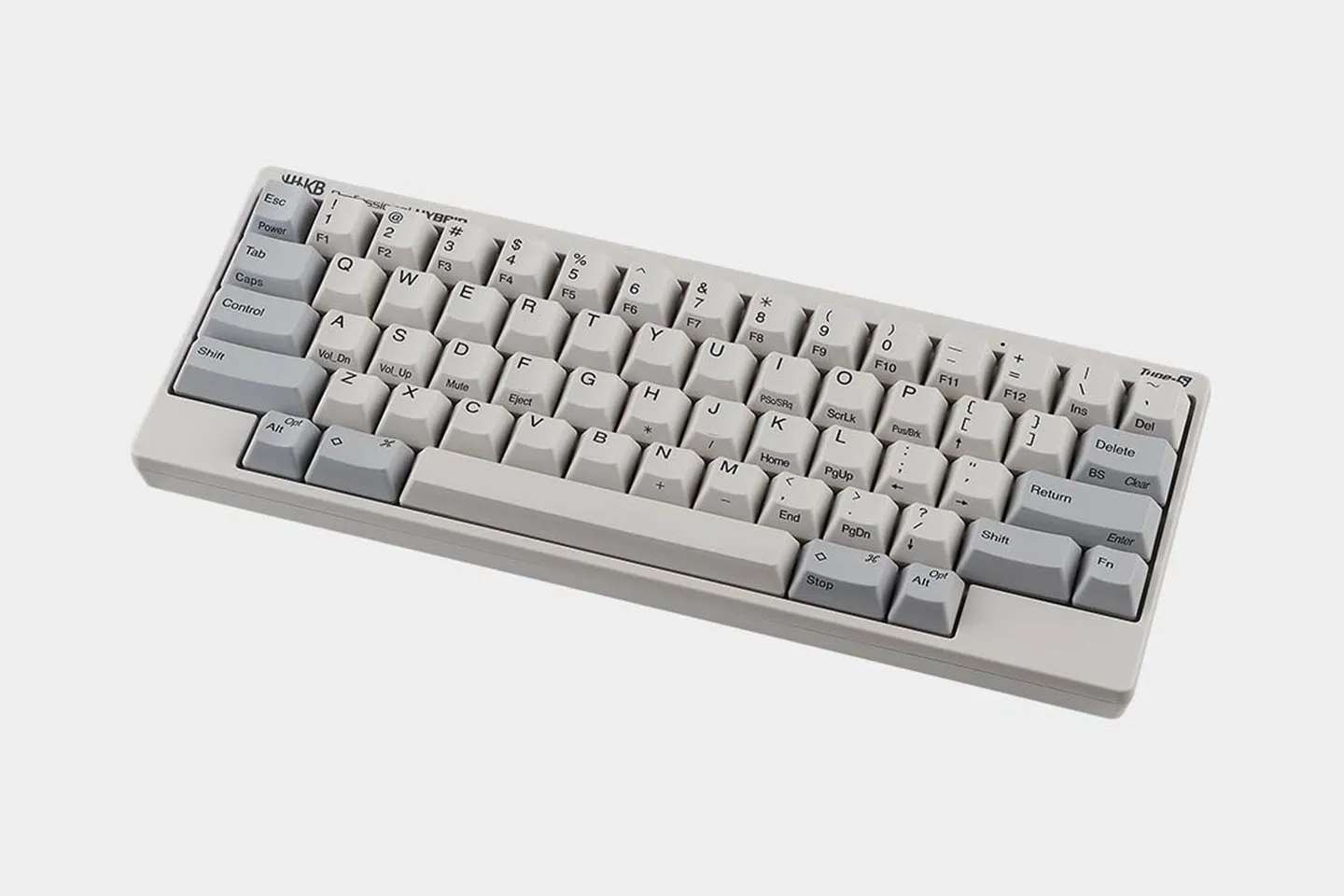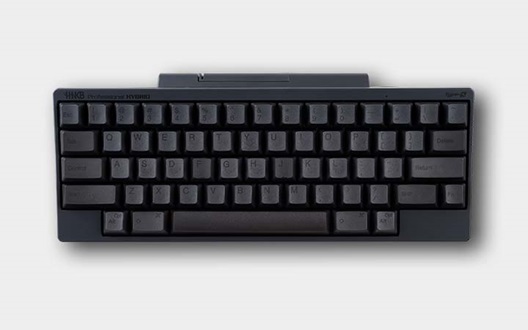
HHKB Professional HYBRID Type-S
The flagship model equipped with silent keys.
Learn More About HHKB Professional HYBRID Type-S
Experience the legendary feel of best-in-class Topre electrostatic capacitive switches, known for their smooth keystrokes and superior build quality. Perfect for professionals and enthusiasts seeking unmatched comfort and performance, the Topre keycap profile provides top-tier ergonomics and tactile feel for those long coding or typing sessions.
Scroll down to explore our premium selection of Topre keyboards or explore our selection of Topre keycaps here.
With Topre keyboards, every press registers through a capacitive sensor rather than a metal contact. Electrostatic capacitive means the switch detects a change in an electric field as a spring and dome compress, so nothing physically has to touch to send the signal. That is different from most keyboards, where two metal leaves meet to complete a circuit.
Actuation force is the downward pressure needed to register a keypress. Ours is 45g across all four Professional models, light enough for long sessions but firm enough to resist accidental taps.
For a programmer or writer typing eight hours a day, that combination matters. You get a consistent 45g press thousands of times over, from one machine to the next. If you want the deeper background on the mechanism, our guide to how Topre switches work covers the spring, dome, and sensor in detail.
Keyboard chatter is where a single keystroke registers twice, usually because worn or dirty metal contacts bounce on impact. Traditional switches rely on those contacts meeting cleanly every time. Ours never make that contact, so the most common cause of double letters simply is not present.
A rounded tactile bump meets your finger on the downstroke, followed by a bottom-out that lands softer than a typical mechanical switch. The bump tells you the key has registered without demanding a hard press. On the standard models, the bottom-out has the full, low "thock" that Topre is known for.
Type-S refers to our silenced variants. A Type-S board adds buffer components inside each switch that shorten travel noise and cushion the return, cutting keystroke noise significantly. The tactile bump stays; the sound around it drops.
That difference decides which model fits your room. On a shared studio floor, or in an early standup with a hot mic, a silenced Type-S board keeps your typing out of the recording. Our overview of quiet typing options walks through when silencing is worth it.
Removing the number pad, function row, and dedicated arrow cluster keeps every key within a short reach of the home row. All four Professional models use this 60-key form factor, which is roughly 40 percent smaller than a standard full-size board. Less desk width also means less distance your hands travel.
There are two separate reasons this layout works, and it helps to keep them apart. First, relocating the arrow and navigation keys onto a function layer is a general trait of any 60 percent board; you hold a modifier and reach nearby keys instead of moving to a far corner. Second, and specific to us, we place the Control key in the Caps Lock position. That single relocation is what keeps your fingers on the home row when you reach for Ctrl.
The tradeoff is straightforward. Those keys are gone as dedicated physical keys, and that takes a short break-in period. In exchange, the function layer and the shorter reach mean your hands stop wandering, which is the point. Our breakdown of the HHKB layout shows exactly where each function lands.
Every Professional Topre model ships with PBT keycaps and DIP switches, and all of them except the Pro Classic add software remapping. A DIP switch is a small physical toggle on the underside of the board that changes key behavior, such as swapping modifier positions, with no software at all. All four have these.
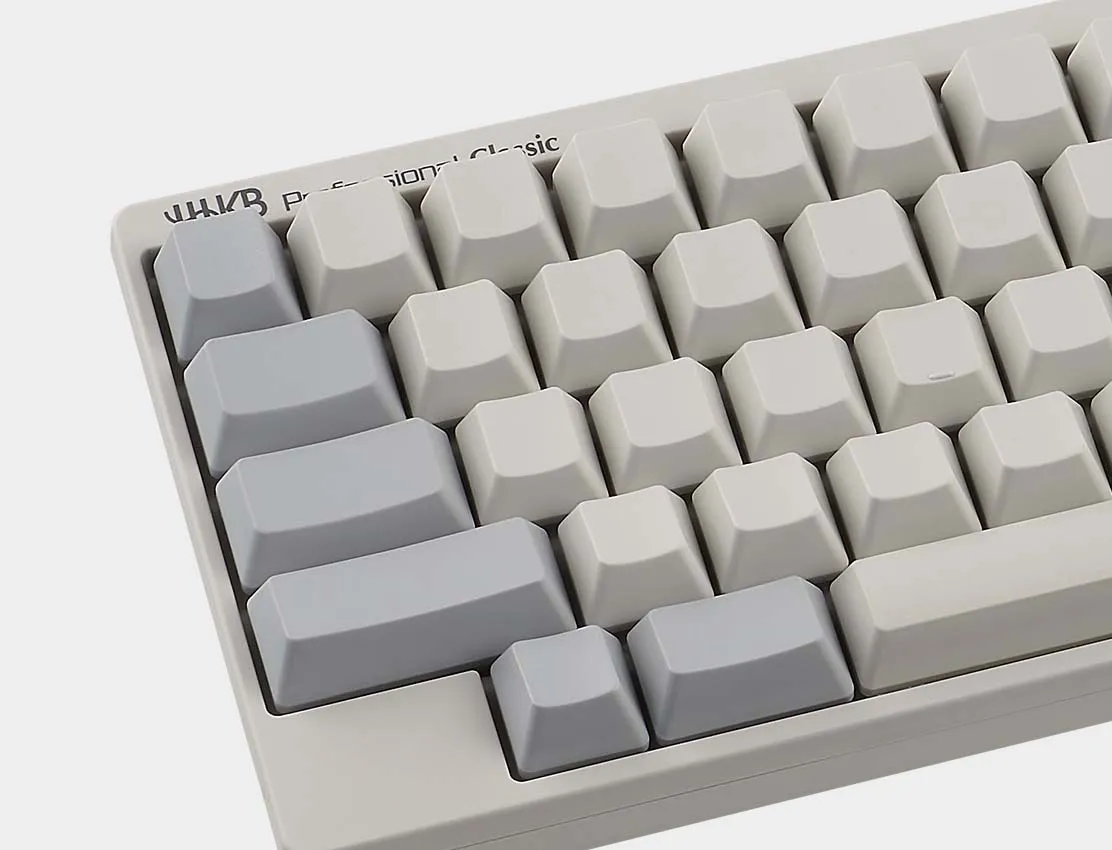
For deeper changes, the Pro HYBRID, Pro HYBRID Type-S, and Pro Classic Type-S support the Keymap Tool, which connects over USB to a Windows PC to reassign keys. The Pro Classic does not offer custom keymapping and relies on its DIP switches alone. The keycaps are dye-sublimated PBT, textured to resist shine, with legends that will not fade, available blank or stamped.
They are built to last and to type on for years. The non-contact capacitive switch is rated up to 50 million keypresses, the keycaps are dye-sublimated PBT that resists shine and fading, and every Professional model carries a two-year U.S. warranty. For a heavy daily typist, that durability is the core of the value.
The cost comes from the mechanism and the materials. Each switch uses an electrostatic capacitive assembly with a spring and dome rather than a simple metal contact, paired with dye-sublimated PBT keycaps and a switch rated up to 50 million keypresses. You are paying for a keyboard designed for long term durability and heavy daily use.
They are electrostatic capacitive switches that register a keypress without any metal parts touching. A spring and rubber dome compress, the sensor reads the change in the electric field, and the input is sent. Every model here actuates at 45g.
No. Topre stems are not shaped like Cherry MX stems, so MX keycaps do not fit the Professional series. Use the blank or stamped PBT keycaps made for these boards.
No. Only the two Hybrid models, the Pro HYBRID and Pro HYBRID Type-S, offer Bluetooth for up to 4 devices; you can read more in our wireless keyboard overview. The Pro Classic and Pro Classic Type-S connect over USB-C only, which our wired keyboard overview explains.