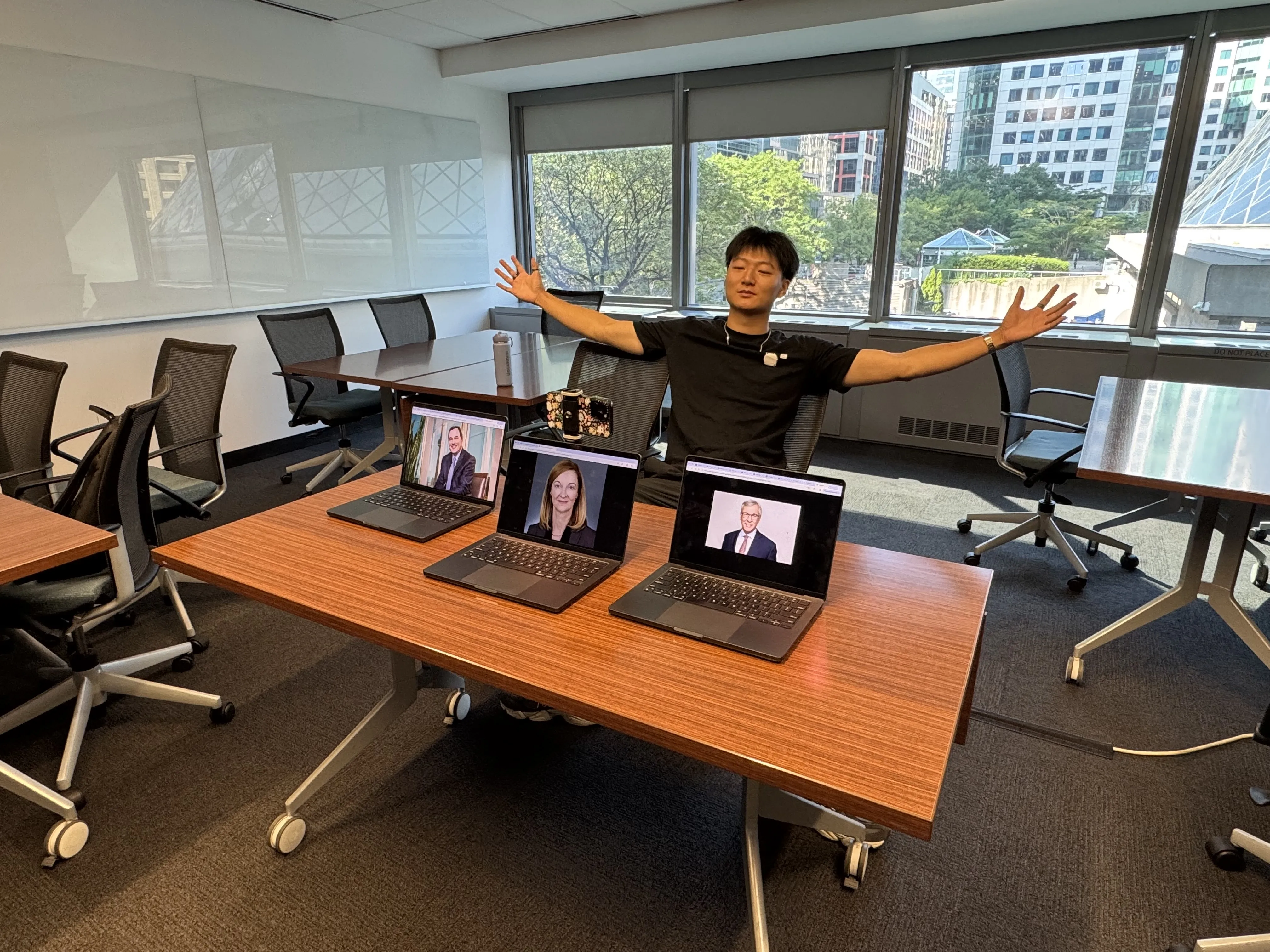
HHKB stands for Happy Hacking keyboard. So, it only feels right that this tool designed for programming efficiency and comfort would find its way into the hearts of hackers themselves, and even further, featured in the world of hackathons. The HHKB team met aspiring programmer and hacker extraordinaire James Yang at LA Hacks in 2025, where he was first introduced to the HHKB. We had the pleasure of talking with him about himself, hackathons, and more.
HHKB: Hello James, please start with an introduction of yourself.
James: My name is James Yang. I am 21 years old, and I live in Toronto, Canada. I am a Computer Science student at Western University.
HHKB: What made you choose Western University for undergrad?
James: I chose Western because it felt like an actual community instead of just a place where people show up for class and leave. When I visited and talked to people, I got the sense that students really live on campus, hang out, and get involved in things, rather than just commuting in and out. Other than Waterloo and UofT, it feels like every other university’s computer science program is the same. Western has a strong Computer Science program, but what really pulled me in was the mix of academics and clubs, hackathons, design events, and startup-focused groups. I also liked that there seemed to be plenty of room to grow into leadership roles and help organize events and communities, rather than just attend them. It felt like a place where I could build both my technical skills and my network of friends and collaborators at the same time.
HHKB: That’s great, it seems like the perfect place! You mentioned their strong Computer Science program, so we are curious, what got you interested in computer science?
James: I became interested in programming at the end of high school when I took a computer science class where the teacher treated coding like a way to build cool things rather than just another subject. We made small games and tools, and I remember the moment when something I wrote actually worked and I could interact with it. That feeling of creating something from scratch and watching it run on a screen hooked me. My math background made the logic side of computer science feel familiar, but what really pulled me in was realizing that I could combine that logic with creativity and build things that real people might actually use. It gave me the same feeling as building with Legos growing up. From there I started teaching myself more, going to hackathons, and getting deeper into both the theory and the practical side of CS. One of my favorite projects I have built include Nodes, a Chrome extension that automates LinkedIn outreach and helps with networking. Outside of tech, I play volleyball to stay active and make time to spend with friends.
HHKB: That does sound really cool, tell us more about Nodes.
James: Nodes helps automate LinkedIn outreach and makes it way easier to personalize messages and manage networking. It is fun because it feels like a real superpower when you are trying to reach out to a lot of people and still keep things thoughtful and not spammy. I am also really proud of the accessibility-focused extensions I have been working on, like ones that simplify complicated web pages into cleaner, high contrast versions or help people highlight and interact with text in smarter ways. Those projects make the web feel more approachable and flexible for different users. I continue to use almost every Chrome extension I’ve made because I always make myself the first user; that way it’s easy to fix bugs and problems as they come up. In total, I have built around 20 Chrome extensions, and each one has taught me more about browser APIs, UX, and how people actually use tools in their real workflow.
HHKB: As of now, what is your favorite part of your major and programming in general?
James: My favorite part of Computer Science and programming in general is that you can start with nothing but an idea and end up with something people can use in the real world. I really like that I can open my editor, slowly wire things together, and then suddenly I am looking at a working feature that did not exist before. In my major, I especially enjoy classes that connect theory to real applications, like data structures and algorithms, because once you understand those building blocks you can use them everywhere in your own projects. I also love that programming gives so much leverage. With just a laptop and an internet connection, I can prototype products, automate tasks, and explore new ideas without needing anyone’s permission. That creative freedom is a big part of why I enjoy what I study.
HHKB: Since you are still studying CS, we would like to know what languages you have learned so far, and which one is your favorite.
James: So far I have worked with Python, Java, C, JavaScript, TypeScript, SQL, and some MATLAB, plus HTML and CSS on the web side, but I definitely spend most of my time in Python and TypeScript or JavaScript. I learn best by building actual projects, so a lot of my knowledge comes from trying to ship things for hackathons or side projects instead of just following tutorials. Python is usually what I reach for when I am scripting, experimenting, or working with AI-related stuff, and TypeScript or JavaScript is what I use when I want to build something people can actually click around and use in the browser. Out of everything, TypeScript is my favorite because I can use it for almost all of my codebases, from frontend React apps to backend APIs, and even some tooling.
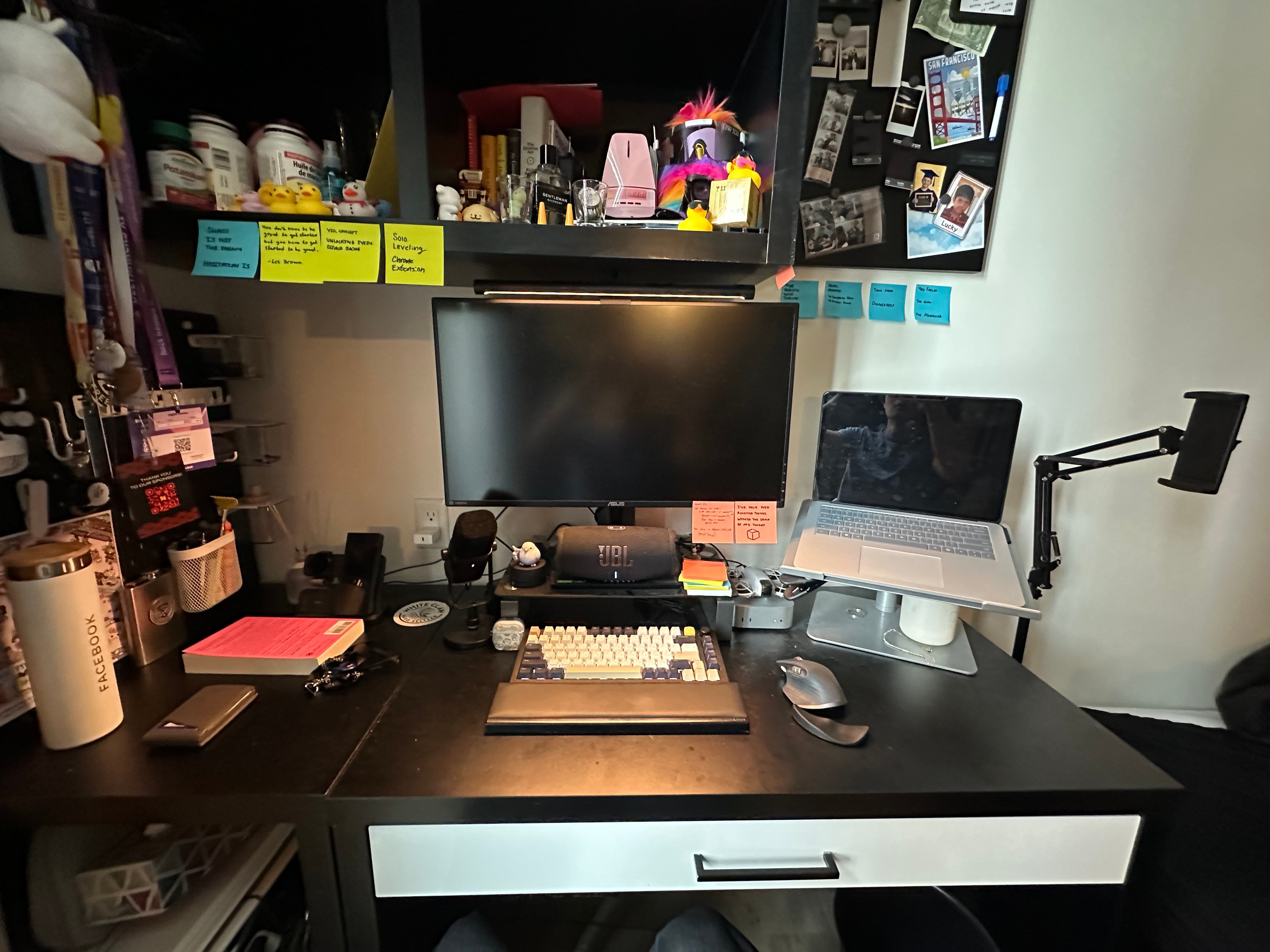 James’ workstation.
HHKB: That’s a lot of languages! Moving into our next topic, we met you at LA Hacks, the UCLA Hackathon, and we would love to know what got you into hackathons?
James: I really started getting into hackathons around the transition from high school into university. I went to my first one not really knowing what I was doing and still had an amazing time, and that kind of hooked me. Most of how I learn now actually comes from hackathons, because they constantly expose me to the unknown unknowns, all the stuff I would not even think to Google if I stayed in a classroom or followed a tutorial. In a single weekend you go from a messy idea, to a rough design, to something that actually runs in about twenty-four to thirty-six hours, and along the way you run into real problems with deployment, APIs, weird bugs, and product decisions. You work with teammates who have different strengths, so you are always picking up new tools and ways of thinking just by building together. The energy is very different from regular classes. You are tired, excited, stressed, and proud all at once, and by the end you walk away with a demo, new friends, and a better sense of what you do not know yet and what you want to learn next.
I am especially drawn to hackathons that encourage solving meaningful problems, like safety, accessibility, or productivity, while still giving you room to be creative and a little weird with your ideas.– James Yang
HHKB: I can see how it hooked you; it looked like an amazing experience. How many hackathons have you been to? And which was your favorite?
James: I have attended more than thirty hackathons so far and each one has given me something different, whether that is new skills, new friends, or just fun stories. Some of my favorite events have been LA Hacks, HackWestern, and especially UofTHacks, where my team and I actually won first place overall. At UofTHacks we built a project we were genuinely excited about. It was called FurMe, and was a nostalgic Furby-inspired desktop AI assistant that lets you have voice conversations and uses a camera to detect your mood and respond with music. We also made a companion web app so you can remotely view the camera feed and use it like a simple security camera, too. Walking away with first place, and the prizes and recognition from the judges was a huge confidence boost and made all the late night debugging feel worth it. Those kinds of events bring together really passionate people, have strong support from organizers and sponsors, and create a space where you can build ambitious projects in a short amount of time. I am especially drawn to hackathons that encourage solving meaningful problems, like safety, accessibility, or productivity, while still giving you room to be creative and a little weird with your ideas. I also love how diverse the crowd is, because you see beginners, experienced developers, designers, and people from all kinds of backgrounds all trying to bring ideas to life in the same room.
HHKB: Tell us more about your journey to LA Hacks 2025, and the project you created.
James: Going to LA Hacks 2025 was a big moment for me because it was my first hackathon in the US and one of the first times I traveled that far just for a hackathon. Flying from Toronto to Los Angeles, I felt a mix of nerves and excitement because I knew the event would be bigger and more intense than a lot of the local ones I had attended. Once my team and I arrived on campus, we jumped straight into brainstorming and ended up building Brainbug, which is basically Duolingo for coding. It lets you race your friends in real time by answering coding questions together. You get code snippets with blanks in them and multiple options to choose from, so you have to think quickly about what actually belongs there. Everyone can scan a QR code to join the same room and compete live, and you can see in real time who is getting answers right the fastest. Over the weekend, we split the work between backend, frontend, and design, and everyone leaned into their strengths while still helping each other when things broke, which they always do at hackathons. The whole experience made me a lot more confident about competing on bigger stages and reminded me how much I enjoy traveling to build cool things with friends.
HHKB: That is an amazing story! And your project sounds so cool! We imagine it can’t all be upside though. What is the most challenging part of computer science for you, and how do you overcome it?
James: One of the hardest parts of computer science for me is how insanely broad it is. There is always some new framework, library, or concept popping up, and if you stare at all of it at once, it just feels like you are forever behind. A lot of the more theory heavy stuff can also feel pretty abstract until you are forced to actually use it. The way I handle this is by learning through doing. I anchor almost everything in projects and hackathons, because when I need a piece of tech to make something work, it sticks way better. I try to focus on tech that feels relevant to what I want to build next, and I am always asking myself, “How can I use this in a real project” instead of just learning it in isolation. That approach lets me pick up new tools as I go, experiment with them in small ways, and then reuse them in future ideas. I still break big topics into smaller chunks so they do not feel overwhelming, and I am not shy about asking friends, mentors, or the internet for help. Over time I have accepted that I will never know everything, and that is fine as long as I keep shipping things and leveling up a bit with each project.
HHKB: That last sentiment is very valuable, something we can all take with us in whatever we do. Looking into your future, what would you like to do?
James: In the future I want to keep using my Computer Science degree to build products that actually fit into people’s day-to-day lives, not just cool demos. My big goal is to become a founder and build something that people open every single day without thinking about it, because it genuinely helps them, whether that is in accessibility, productivity, or just making tech feel more human. I see myself working on tools that give people leverage, like smart assistants, better interfaces, or platforms that make it easier to create and learn. I also really want to start vlogging and sharing that journey, from building products to going to hackathons and figuring things out in public. I have realized I am at my best when I put 110% into myself and my own interests, so long-term I want to be in a place where I am fully betting on my own ideas, my own company, and the people I choose to build with.
The programming community has been incredibly important in my journey. I have learned so much from people who were just a bit ahead of me and were willing to walk me through how they think and how they solve problems.– James Yang
HHKB: Those are some great dreams! Revisiting a topic you touched on earlier, how valuable has the programming community been to you?
James: The programming community has been incredibly important in my journey. I have learned so much from people who were just a bit ahead of me and were willing to walk me through how they think and how they solve problems. Hackathons, builders, and founders have been some of the best people I have met and talked to, and being around people with high agency who just decide to build something and then actually do it is super inspiring. I am also in a club where we work on anything besides school, mostly side projects, and that has been huge for receiving real feedback and testing ideas in a low pressure but honest environment. Hackathons, online spaces, campus groups, and that club have all given me places to get feedback, see how others structure their projects, and pick up tricks you never get from lectures or textbooks. I really love being in environments that push growth, where everyone is shipping, experimenting, and trying new ideas. When I see friends launch cool projects, it makes me want to level up too, so the whole process feels less like solo grinding and more like being part of a community of builders.
HHKB: What does your daily schedule look like?
James: On a typical day during the school year, I go to class and do what I need to do for school, but most of my real energy goes into building and recruiting. Between classes I am usually working on some side project, messaging people, or prepping for interviews instead of just grinding assignments, because I genuinely think that is more important for my future. I have a group of friends who love talking about new project ideas and spinning up random builds, so a lot of my afternoons and evenings are spent in study rooms or cafés with them, half working and half brainstorming. I make sure to still have a life outside of my laptop, so I play volleyball at least twice a week and make time to hang out with friends. Most nights I end up staying up late working on whatever I am obsessed with at the moment, whether that is a hackathon project, a Chrome extension, or something for a startup I want to apply to. Prioritizing building and recruiting this way has opened a lot of doors for me and helped me land interviews and roles at startups and other companies, so it feels like the right tradeoff.
HHKB: Sounds like very packed days! Transitioning now into keyboards, what interests you most about mechanical keyboards?
James: Mechanical keyboards interest me because they take something I do all day, typing, and turn it into something that actually feels fun and satisfying. I am really into keyboards at this point. I mod and lube switches, research the best models, and spend a lot of time looking at nice keycaps. I am especially obsessed with that thoccy, creamy sound you get from a well-built board, and I actually spent around eight hours lubing the switches on my current keyboard just to get it feeling and sounding the way I wanted. When a keyboard feels that good to use, it genuinely makes me want to type and code more.
When I discovered the HHKB at the hackathon I was really excited and honestly just wanted to type on it for the entire event. It felt super clean and intentional to use.– James Yang
HHKB: We at HHKB love a thoccy sound too. And it seems like you are a keyboard expert, so we want to know, how deep into the mechanical keyboard world were you when we met you at LA Hacks
James: Before LA Hacks I was already pretty deep into mechanical keyboards. My daily driver is a 75% board that I built and modded myself, with lubed switches and tuned stabilizers to get that thocky, creamy sound I like. So I already knew a fair bit about switch types, layouts, and custom builds. When I discovered the HHKB at the hackathon I was really excited and honestly just wanted to type on it for the entire event. It felt super clean and intentional to use. The cool part is that the keyboard I use now compares pretty closely to the one I used at the hackathon, both in feel and sound.
HHKB: Yes, we were super excited for you to try it too. You described liking the sound, would you say that was your favorite part?
James: Yes. Both the sound and feel. It felt like a really professional, high quality keyboard the moment I started typing on it. The keys felt smooth and consistent, and every press had this clean, satisfying sound that made me actually want to keep typing. On top of that, the layout still felt very focused and efficient, so it gave me everything I needed for serious work without taking up a ton of space on the table.
HHKB: We couldn’t have said it better ourselves! Do you feel like the HHKB helped your workflow in the hackathon then?
James: Yes, I do think the HHKB helped my workflow during the hackathon. The compact layout freed up a lot of space on the desk, which actually matters when you have a laptop, energy drinks, snacks, and random cables everywhere. The Shift and Control keys being switched did have a bit of a learning curve at first, but after about an hour my hands adjusted and I was able to work as normal. I prefer mechanical keyboards over laptop keyboards in general, so I was really excited to use a proper board like that for the whole event. Once I got used to it, the shortcuts felt natural, moving around my code was smooth, and the sound and feel of the keyboard made long coding sessions a lot more enjoyable. Over the course of the hackathon, that comfort and efficiency really added up.
HHKB: I know you are interested in trying the HHKB Studio Snow. What interests you about that keyboard?
James: I am interested in the HHKB Studio Snow because it feels like a really well-rounded keyboard that fits both how I work and what I like aesthetically. It has extra functions like right, left, and middle click built in, which makes it feel like more than just a keyboard and more like a full control surface for coding and creation. I care a lot about how my setup looks and feels, and there is something really nice about the white design and even the name Snow that makes it feel clean, calm, and almost beautiful to use and think about. It seems like the kind of board that would sit on my desk and just make me want to sit down, type, and build things for hours, whether I am at a hackathon or working from home.
HHKB: We love to hear that, it is a great product. What other equipment do you use at your desk?
James: Most of the time I work on my Mac Studio at home, and I care a lot about the equipment that lives on my desk. Right now I use an MX Master mouse, an external monitor, and Sony headphones, and I have put a lot of effort into making the setup feel clean, comfortable, and nice to use. I like having a space where everything feels intentional and makes me want to sit down and work. I feel like an HHKB would be the perfect addition to my setup, especially something like the Studio Snow. It would fit right in with the rest of my gear and make the whole workspace feel even more dialed in for coding and building projects.
HHKB: It does sound like HHKB Studio would round out the setup perfectly. When you have free time, what do you like to do?
James: In my free time I mostly bounce between building side projects, playing volleyball, and eating good food. I genuinely enjoy turning random ideas into actual builds, so a lot of my “free time” still looks like coding, testing things, or brainstorming with friends. Volleyball is my main way to get away from the screen. I play intramurals and slightly competitive leagues, which makes it a fun mix of staying active, trying to win, and just enjoying time with my team. Outside of that, I love going out for food or dessert, trying new spots, and using that as a way to hang out and talk about life and new project ideas. Even when I am not actively coding, I am usually thinking about what to build next, but I try to balance that with staying active and spending time with friends.
HHKB: That’s a great thing to balance. With that said, are you involved in any extracurriculars?
James: Yes, I am pretty involved in tech and builder focused communities at Western. I am part of a club called Western Founders Network, where we work on anything besides school, mostly side projects and startup style ideas. There, I mentor freshmen and sophomores on how to build real products instead of just homework assignments. Right now I also manage a team of four students who are working on a full stack project together, and I help them with things like breaking the work down, making technical decisions, and actually shipping features. On top of that, I stay involved with hackathons, design events, and founder-type groups, which keeps me around people who are excited about building and learning. I really like being in spaces where everyone is experimenting, asking questions, and turning ideas into code.
 James refueling.
HHKB: Ok, last question, what is your favorite part of going to Western University?
James: My favorite part about Western is the mix of strong academics with a real sense of campus life and community. There is always something happening, whether it is a club event, a hackathon, or just people hanging out between classes. That makes it easier to meet new people and to find opportunities to get involved beyond just lectures and assignments. I also appreciate that Western gives students room to create their own things, whether that is new clubs, events, or projects. The campus itself has a nice atmosphere too. Walking between classes, grabbing food with friends, and then heading off to code or play volleyball makes it feel like a place where I can grow both as a person and as a builder.